0116 251 7741
 Request a brochure
 Request a quote

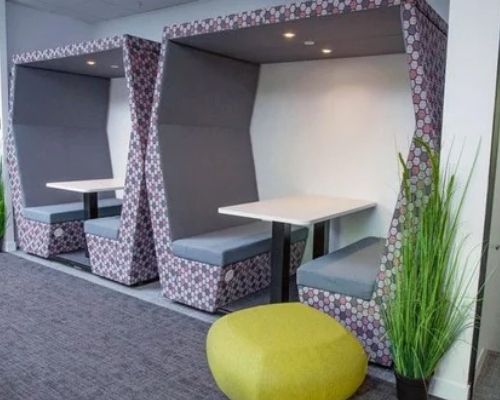
Open-plan offices have many benefits, but it’s not uncommon to reach a point where the meeting room is permanently booked, video calls are being taken in the kitchen and quick conversations end up happening over the top of someone else’s desk. Adding another full meeting room is rarely practical when floor space is limited, and many discussions only last a short time anyway.
A meeting pod gives your team a dedicated space for conversations, calls and planned meetings without the cost or disruption of building work. When choosing a meeting pod there are several factors to consider. Size, acoustic performance, privacy, comfort, technology, your office layout and how often the pod will be used all affect whether it meets its potential to become a well-used oasis in the busy workplace.
Here at Lismark Office Furniture we have one of the best ranges of meeting pods in the UK, but before you commit, it’s important to pinpoint exactly what you’re looking for. Read on to find out more about the factors to assess before you buy, so you can make a confident and informed decision.

The main intended use should always be your starting point. A meeting pod for office use can support a wide range of activities, including:
Each of these activities places different demands on the pod. A unit used for regular team meetings needs enough seating, a table and room to spread out. A pod used mainly for one-to-ones can be far more compact. Pods used for confidential HR conversations or client meetings will need a higher level of privacy than one where colleagues gather to talk through a project.
Consider how your team works day-to-day. The clearer you are on the main purpose, the easier every other decision becomes.
Meeting pod size should reflect the number of people expected to use it and the amount of floor space you have available. Most of the office meeting pods we offer come in two, four or six-seater versions, which means it couldn’t be simpler to match your preferred pod to your needs.
Two-person pods are perfect for one-to-one conversations, phone calls and short discussions. They give your team much needed private space without taking up much of the office.
The two-seater version of the Zen Meeting Pod is a good example. Its high back and roof provide privacy, while the open front keeps the pod feeling light and spacious. Compact designs like this work well where you need several additional private spaces but don’t want to take up large areas of floor space.

Four to six-seater pods can host collaborative meetings, project discussions and small presentations. The Jensen Hut Meeting Pod, with its high acoustic surround and upholstered roof, and the Bill Meeting Pod, with its glass door and two sofas enclosed by upholstered high walls and a ceiling, are popular choices for small teams.
Of course, larger pods have a bigger footprint, so think about how they will affect circulation routes and the workspace around them.
It can be tempting to choose the largest option simply because it offers more capacity. However, in practice, a six-seater pod that usually hosts two people takes up valuable space that could be used elsewhere. Base your decision on typical usage patterns rather than the occasional busy day.
Sound control is one of the most important factors when choosing a meeting pod, particularly in an open-plan office. The right acoustic meeting pods allow people to talk freely without disturbing colleagues nearby and vice versa.
When comparing options, look at:
Good acoustic performance depends on the surrounding office environment construction as well as the pod’s construction. A pod placed beside a busy kitchen will never feel as quiet as one positioned in a calmer area.
It also helps to understand the difference between pod types. Fully enclosed meeting pods, offer complete privacy in a room-within-a-room environment. Open-sided meeting pods provide noticeable sound reduction and a more relaxed feel, but conversations will not be fully confidential. The right choice depends on how your team will use the space.
Alongside sound, think about how much visual privacy users need. Office privacy is not only about what people can hear, but also what they can see.
Key points to weigh up include:
Our range is grouped by basic, enhanced and premium privacy levels, which makes it simple to narrow down the options.
Consider the pod in the context of your wider office layout too. How people move around the space, where desks sit and how busy the surrounding areas are will all affect how private the pod feels in practice.
A meeting pod needs to be comfortable enough for the length of time people will spend in it. A two-minute call can be taken almost anywhere, but an hour-long planning session needs proper support.
Look closely at:
Comfort becomes especially important if meetings regularly run longer than quick conversations. The seating in Lismark’s office meeting pods is specially chosen for commercial use, and the enveloping design of many pods creates a welcoming place to sit and talk. If you can, picture a typical meeting in the pod and check that everyone would have enough room to sit, work and move comfortably.
Modern meetings increasingly mix in-person and remote attendees, so your office meeting space needs to support both. Before choosing a meeting pod, check whether it can handle the technology your team relies on:
Many of our pods can be specified with power sockets, and some models, such as the Entente Meeting Pod and Hyde Meeting Booths, work well with TV brackets to provide integrated screens.
Review your existing setup before you buy, particularly if the pod will be used frequently for hybrid meetings. A pod that cannot easily connect to your video calls will be used less often than you might expect.

Any enclosed meeting space needs to stay comfortable throughout use, so ventilation and lighting deserve careful thought.
Good airflow matters in any enclosed pod. Without it, the air can quickly become warm and stale, and meetings tend to be cut short. Consider how many people will use the space at any given time and how long meetings usually last. Our fully enclosed pods come with effective ventilation, while open-fronted designs naturally allow more air to circulate.
Users need enough light to read documents, work on laptops and present professionally on video calls. Some pods include built-in lighting, such as the Berlin Acoustics MEET Pod, or the Condo Pod Range with its pendant light. Also consider where the pod will sit in the office, as natural light and overhead lighting will affect how bright the interior feels.
A meeting pod should make your office easier to use. Before installation, consider:
It’s important to measure the pod’s dimensions carefully and allow room for comfortable access. Our experienced office furniture experts can advise on this. Larger pods have a greater impact on floor space, so they need careful planning to avoid creating bottlenecks or blocking natural routes between work areas.
Most of our meeting pods are sturdy units built in place by our specialist installation team and are not designed to be moved regularly. If you expect your layout to change often, mobile options such as the Cabana Mobile Meeting Pod or ThinkPod Agile Meeting Booth will offer the flexibility you need.
The construction and finish of a meeting pod affect how it looks, how long it lasts and how well it suits your workplace. Our office pods are built to the highest standards of design and quality, with commercial-grade frames, foams and fabrics that stand up to the rigours of everyday office use.
When comparing options, look at:
Bringing everything together, this checklist can help you compare options before you buy. Our product descriptions also include at-a-glance guides that make it easy to see key details for each pod.
Working through these points helps you narrow down the options quickly to find the best office furniture for your unique needs.
Selecting the right meeting booth is about balancing privacy, acoustic performance, comfort, capacity and the space you have available.
Our extensive range of acoustic seating pods also provides spaces for meetings, conversations and focused work within modern office environments, giving you flexible options as your needs grow.
Our experienced team is always happy to talk through what will work best in your space.
Explore our meeting pods to find the right option for your office or call our team on 0116 251 7741 to discuss suitable solutions for your workplace.
The right size depends on how many people will use the pod and the type of meetings it will host. Base your choice on typical usage rather than the maximum number of people who might occasionally attend. Most of the meeting pods we supply are available in two, four or six-seater versions.
Yes. Meeting pods provide dedicated spaces for conversations and meetings within open-plan workplaces, helping to separate these activities from surrounding desks so colleagues can stay focused.
Acoustic performance is particularly important where meetings involve confidential discussions or where nearby employees need to concentrate. Both the pod’s acoustic construction and the wider office environment affect how well sound is controlled. Fully enclosed pods offer complete privacy, while open-sided designs reduce sound without making conversations fully private.
Meeting pods can support video conferencing when they have suitable power, connectivity, lighting and space for the required equipment. Options such as power sockets, monitor brackets and integrated screens can be added to many of the pods we offer.
Meeting pods and traditional meeting rooms serve different purposes. Pods provide flexible, smaller-scale meeting spaces without the need for a conventional built room, making them ideal for quick discussions, calls and small team meetings. Larger or more formal meetings may still need traditional meeting facilities, so many businesses find the two work best side by side.